Ecosystem
Layer 2s explained: why the same swap costs cents on Base and dollars on Ethereum
· 6 min read
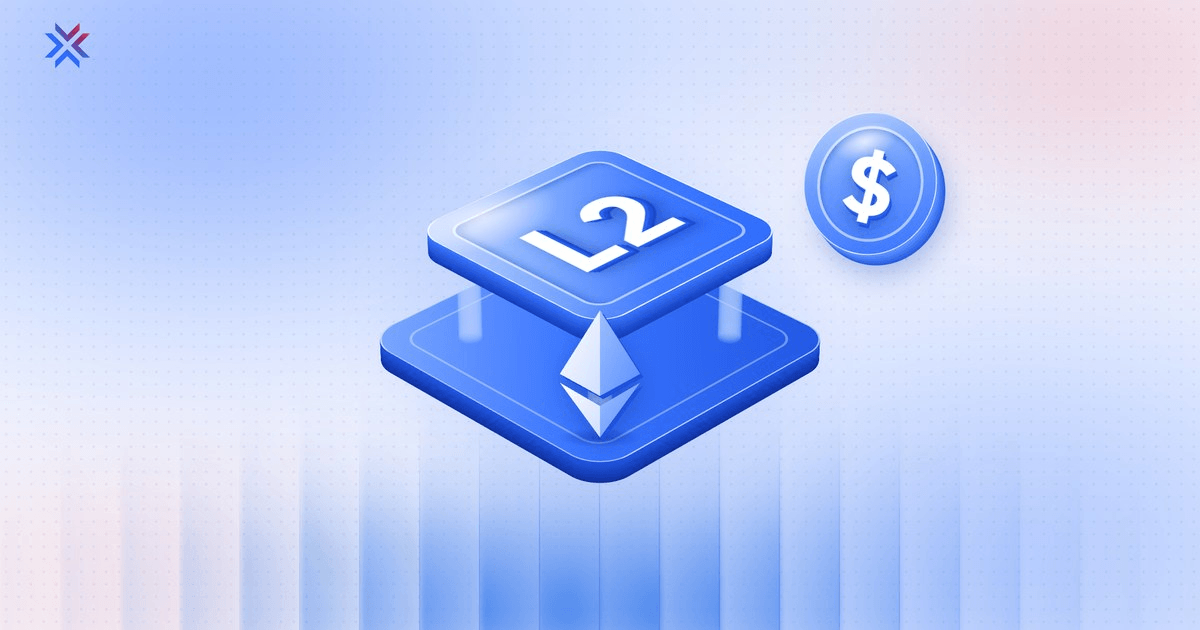
Make the same token swap on Ethereum mainnet and on Base, and the network fee can differ by a factor of a hundred or more. Both run Ethereum-style apps. Both use ETH for gas. So why the gap?
The answer is Layer 2s — networks built on top of Ethereum to make it faster and cheaper. About $40 billion sits on them, and Base alone runs at roughly 120 user operations a second — more than 10 million a day (L2BEAT, October 2026).
Layer 1 vs Layer 2
Layer 1 (L1) is the base blockchain: Ethereum mainnet. It is highly secure and decentralised, but block space is limited. When demand rises, users bid against each other and fees go up.
Layer 2 (L2) is a separate network that handles transactions on its own, then reports the results back to Ethereum. Users get lower fees and faster confirmations, while Ethereum still acts as the final record.
Think of Ethereum as a high court and L2s as local courts. Most cases are settled locally and quickly; the high court holds the official record and resolves disputes.
How rollups work
Most major L2s are rollups. They work in three steps:
- Execute: transactions run on the L2, ordered by a component called the sequencer.
- Bundle: thousands of transactions are compressed into one batch.
- Post: the batch is posted to Ethereum, so anyone can check the data and rebuild the L2's state.
Because one Ethereum transaction carries the data of thousands of L2 transactions, the cost is shared, and each user pays a fraction.
Optimistic vs ZK rollups
Rollups differ in how they prove their batches are correct.
| Optimistic rollups | ZK rollups | |
|---|---|---|
| How correctness is shown | Assumed valid unless someone challenges it with a fraud proof | Every batch comes with a cryptographic validity proof |
| Examples | Arbitrum One, Base, OP Mainnet | ZKsync Era, Linea, Scroll |
| Withdrawing to Ethereum via the official bridge | About 7 days (the challenge window) | Usually hours, once the proof is verified |
| EVM compatibility | Very close to Ethereum | Close, and improving fast |
The 7-day wait applies only to the official bridge back to Ethereum. Many users move between chains through cross-chain swaps or third-party routes that settle in seconds.
Why L2 fees dropped so sharply
Two Ethereum upgrades changed L2 economics:
- Dencun (March 2024) introduced “blobs”: a cheaper, temporary space for rollup data. L2 fees fell to fractions of a cent on many chains.
- Fusaka (December 2025) let Ethereum carry more blobs by having nodes sample data instead of downloading all of it, giving rollups more room.
The result: Ethereum mainnet focuses on security and settlement, while L2s handle most everyday activity.
Meet the big three
- Base: built by Coinbase on the OP Stack, the largest L2 by value secured (around $15.3 billion) and some of the highest daily activity of any chain.
- Arbitrum One: second by value secured (around $10.2 billion), with a deep DeFi ecosystem.
- OP Mainnet: Optimism's own chain (around $1.8 billion) and the origin of the OP Stack, the shared framework Base and many other chains are built on.
Things to know before you use an L2
- You need ETH on that L2 for gas. ETH on mainnet can't pay fees on Base; you need it on Base.
- Token addresses differ by chain. The same token has a different contract address on each network. Check you're using the official one.
- Your wallet address stays the same. One address works across Ethereum and its L2s, but balances are separate per chain.
- Liquidity varies. A token may have deep liquidity on one L2 and very little on another, which affects your price.
- Decentralisation is still in progress. Most L2s run a single sequencer today. L2BEAT rates each rollup's maturity in “stages” if you want to compare.
The bottom line
Layer 2s are how Ethereum scales: fast, low-cost transactions that still settle on Ethereum. Knowing which chain you're on, what gas it needs, and how to move between them makes every DeFi action smoother and cheaper.
Sources: L2BEAT, scaling summary and activity, 23 October 2026; ethereum.org, history of Ethereum upgrades for the Dencun and Fusaka dates.
Disclaimer: These materials are for general information purposes only and do not constitute financial, investment, tax, or legal advice, nor a recommendation or solicitation to buy, sell, stake, or hold any crypto-asset. LCX Liberty Labs will not undertake efforts to increase the value of any crypto-asset that you buy. Crypto-assets are highly volatile and you may lose your entire investment. Past performance is not indicative of future results. Some crypto products and markets are unregulated, and you may not be protected by government compensation or regulatory protection schemes.